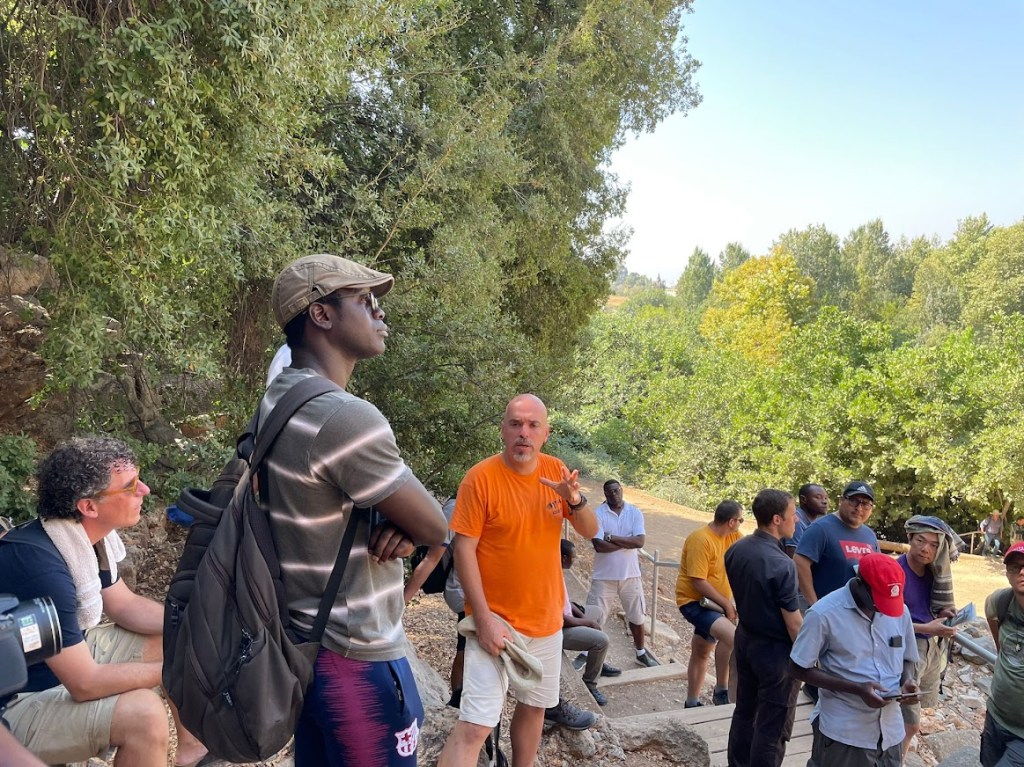
On site lecture at the Sanctuary of Banias (Caesarea Philippi)
Following a two-year hiatus, dictated by the Covid-19 pandemic and the closure of borders, this September saw the return of the four-week programme on the study of the archaeology and geography of the Holy Land, with the participation of thirty-five students of the Pontifical Biblical Institute in Rome, led by Rev. Dr Josef Mario Briffa SJ. In many ways this programme continues the core of the mission of the PBI in Jerusalem, since the first carovana in 1913, which is the understanding of the Bible in its historical and archaeological context.
The programme started with several introductory lectures in the Aula Martini at the PBI in Jerusalem, interspersed with visits to key sites in Jerusalem relating to both the Hebrew Bible and the New Testament: the Church of the Holy Sepulchre; Mount Sion and its sites; Mount of Olives, Gethsemane and its sites; the “City of David” and the remains from the Kingdom of Judah, as well as Jerusalem at the time of Jesus. The group also visited many sites from Dan and Banias in the North, down to Arad and Beersheba in the south, as well as key archaeological sites like Megiddo, Hazor, Lachish, Sebastia, Mount Garizim, Qumran and Masada, Herodion and Bethlehem.
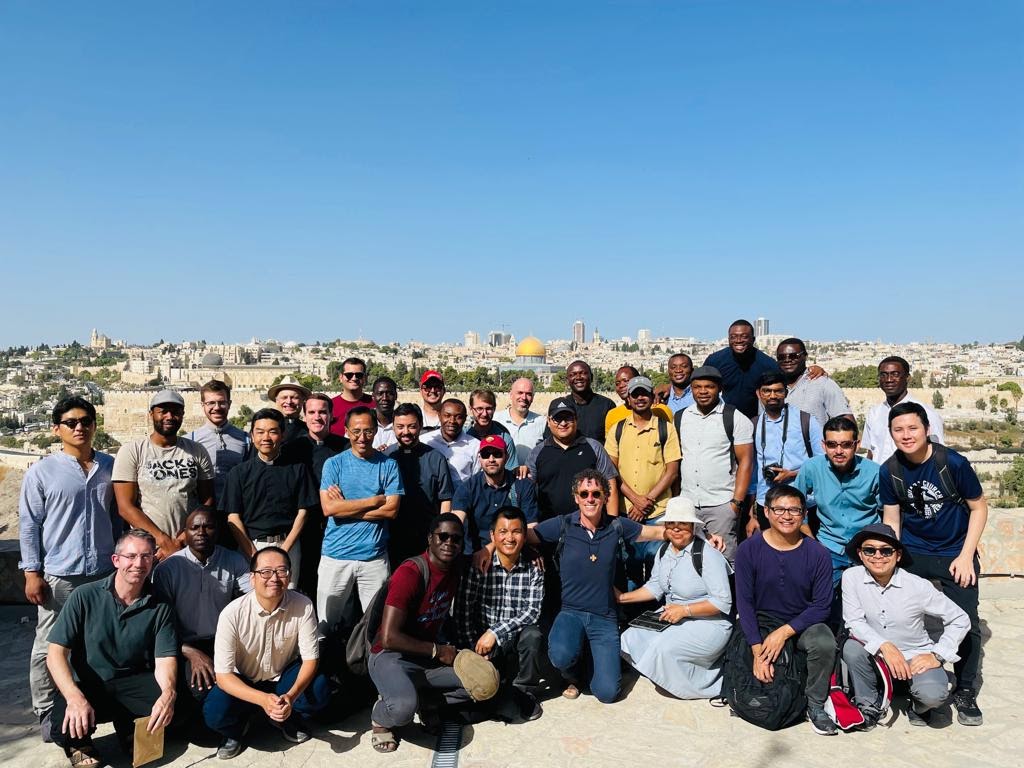
Group photo at Dominus Flevit, Jerusalem
A second round of lectures and visits was done in October, for the students joining the semester programme offered in conjunction with the Hebrew University of Jerusalem. Before the start of the semester at the HUJI, the students — led once again by Fr Josef — visited several sites in the Galilee, the Negev as well as in Jerusalem. The visits and lectures that form part of courses on the historical context of Old Testament and New Testament, will be completed in the course of the semester.
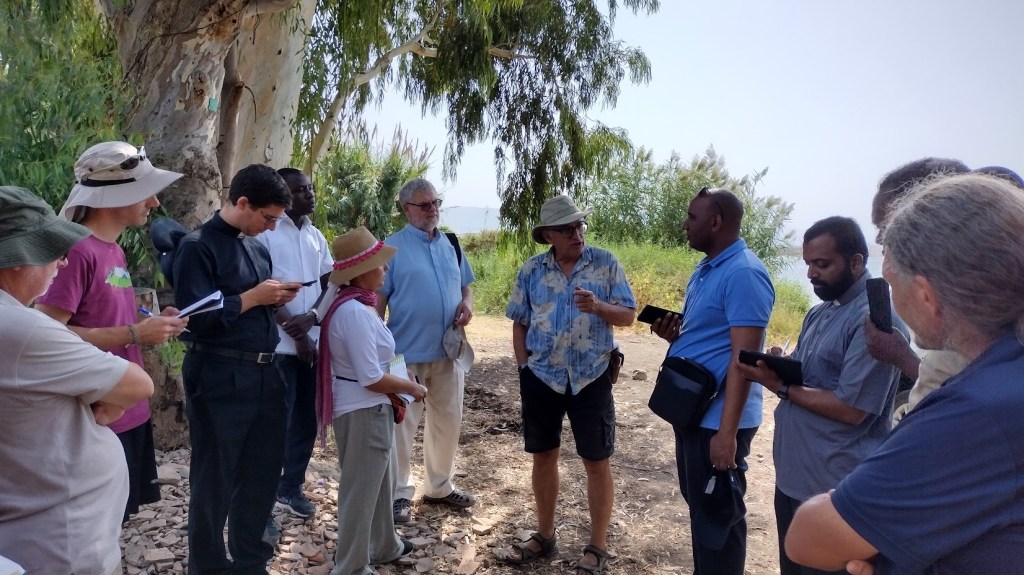
Visit to El Araj, one of the contenders for the location of Beth Saida, led by Prof Motti Aviam, director of the excavations.
 Pontifical Biblical Institute in Jerusalem