While most visitors come to see our mummy, the archaeological core of our collection is the material (and the archive) from Teleilat el-Ghassul. “Teleilat what?” I can hear you quite a few of you say.
Not exactly a site known to the uninitiated. Teleilat el-Ghassul is c. 295 metres below sea level, on the east side of the Jordan river, to the north of the Dead Sea. It is a large site, some 50 acres in area, first excavated by Fr Alexis Mallon and the team from the Pontifical Biblical Institute between 1929 and 1938. Excavations resumed in 1960 under the direction of Fr Robert North. The site has subsequently been excavated by the University of Sydney.
But what about Sodom and Gomorrah?
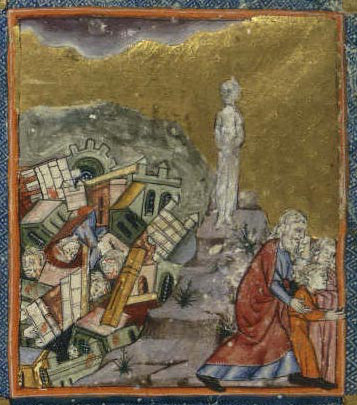
It might seem far-fetched to us today, but the initial impetus for research was to try and uncover remains related to the stories of the destruction of Sodom and Gomorrah. To us, it may even sound like some crazy endeavour, well detached from mainstream academia.
We’d be mistaken. In the 1920s and 1930s, the search for the possibile location of the five cities of Genesis 14,8 was all the rage. Discussions on the biblical texts, as well as results of surveys around the Dead Sea, offer a who’s who of the academic circles of the time, with the likes of W.F. Albright, M.G. Kyle (Pittsburgh Theological Seminary), M.J. Lagrange (École Biblique), all wading into the debate.
Needless to say, the excavations at Ghassul did not lead to the discoveries of the ancient mythical cities of Sodom and Gomorrah. They did, however, provide something new to the chronological framework of the ancient southern Levant. The finds were ascribed to a new period, later than the Neolithic and earlier than the Bronze Age. The Ghassul culture was assigned to the Chalcolithic by W.F. Albright, and became the type site for this period, so called Ghassulian.
 Pontifical Biblical Institute in Jerusalem